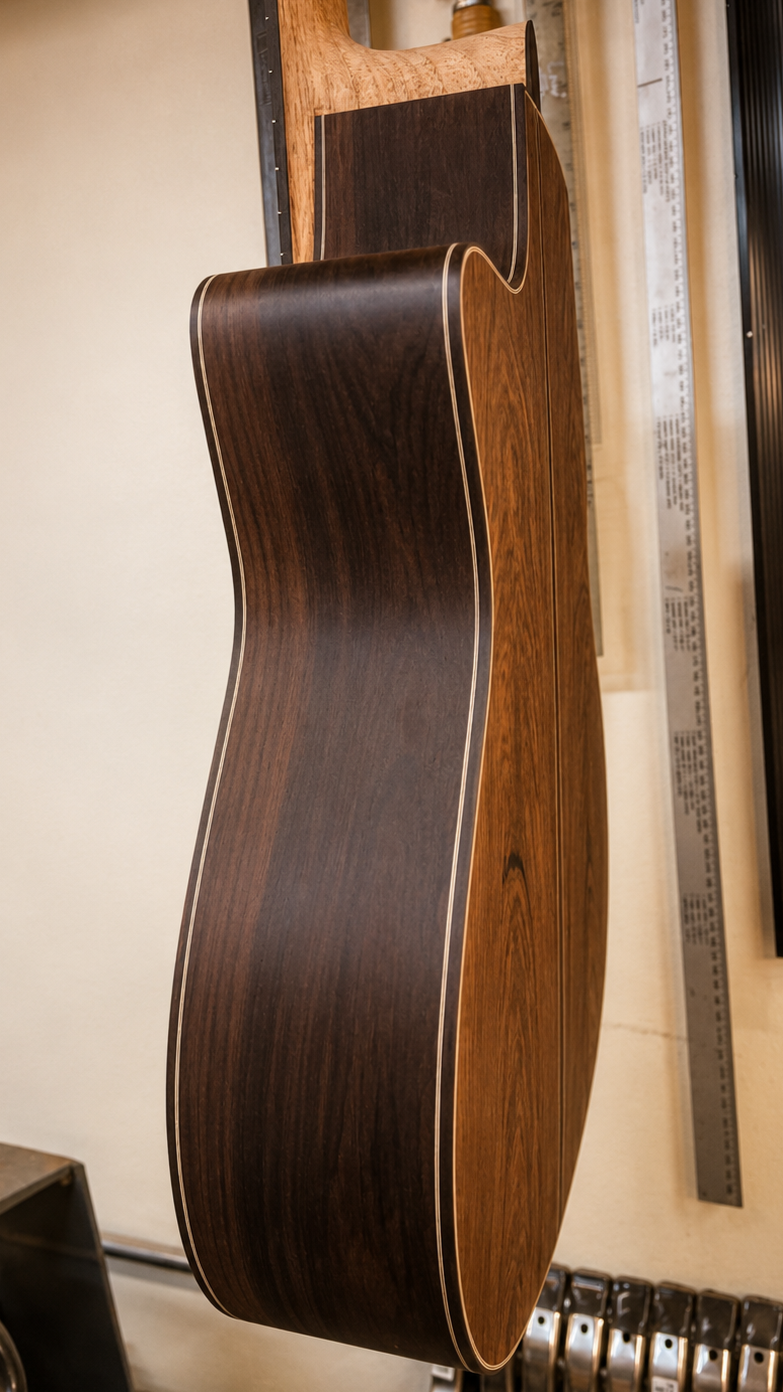
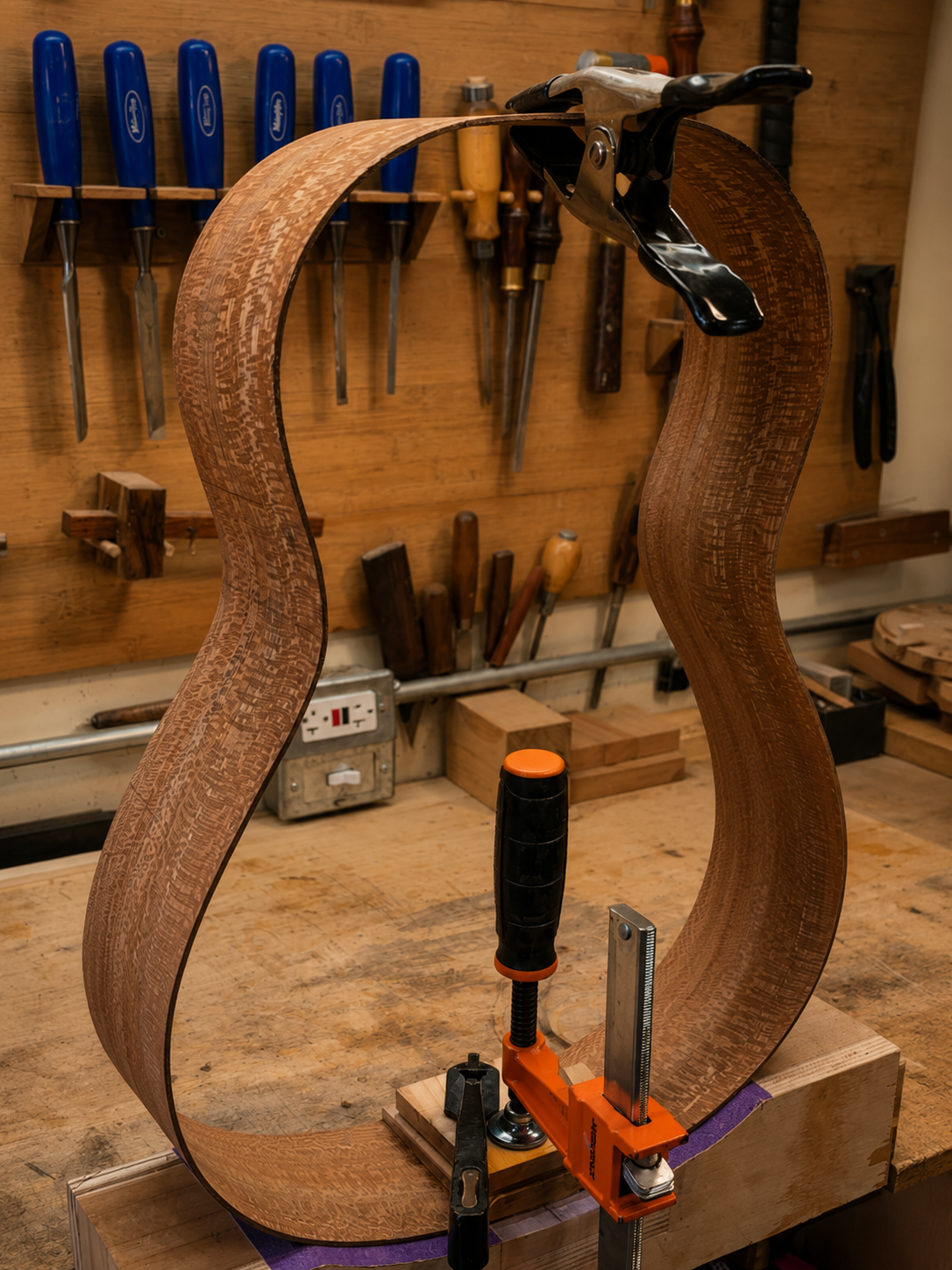
Every guitar begins with a conversation. Understanding the player's musical goals, ergonomic needs and aesthetic ideas establishes the direction of the instrument. From there, the process begins with the careful selection of the wood, choosing each set for its acoustic properties and visual character to suit the intended design.
I produce a limited amount of guitars each year, keeping the work focused, intentional and attentive to every detail.
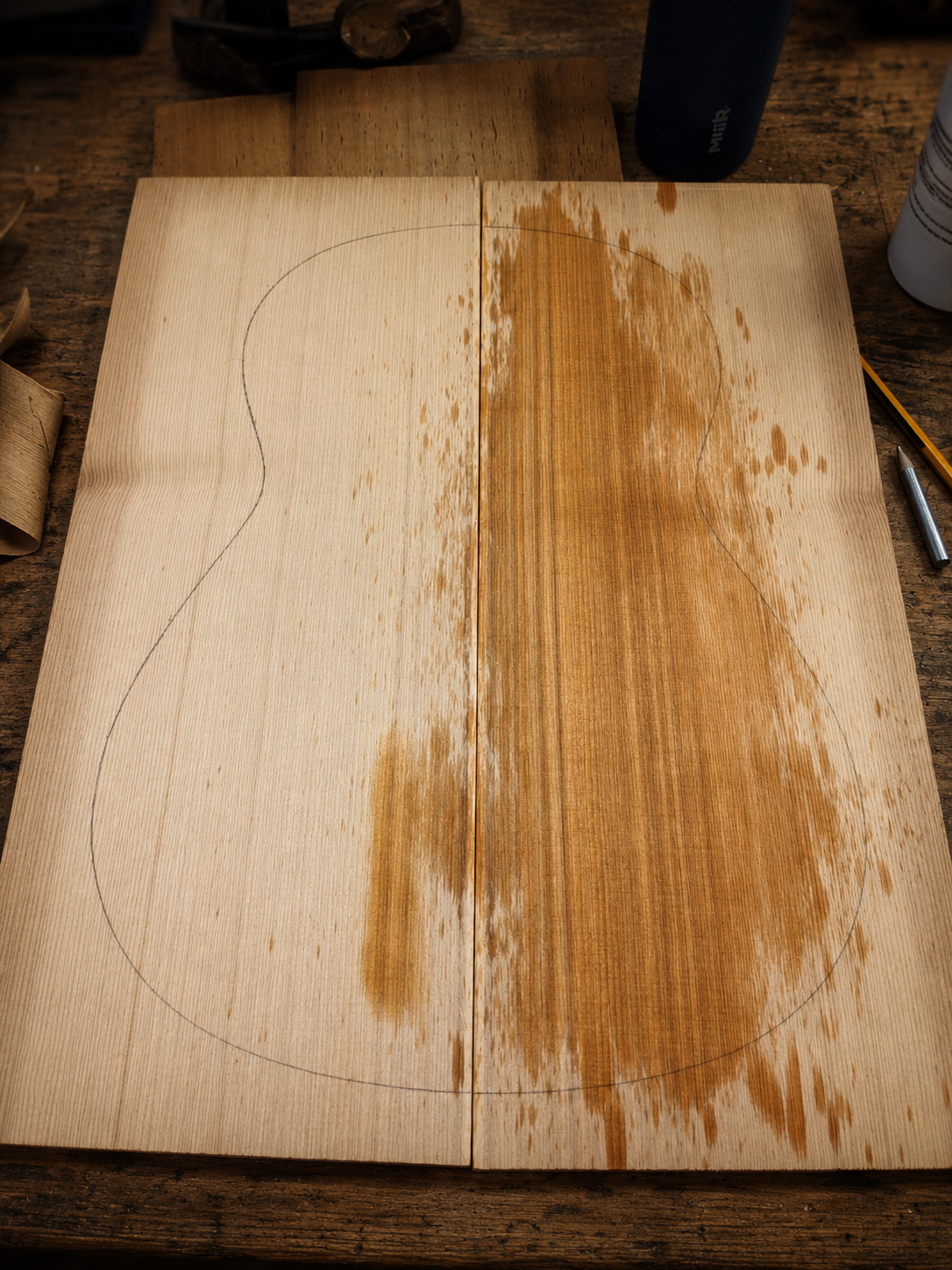
As both a builder and a lifelong player, I want an instrument to feel alive, expressive and deeply musical, and much of that character is shaped through careful control of the top, including thickness, bracing layout and final tuning to balance responsiveness and projection.
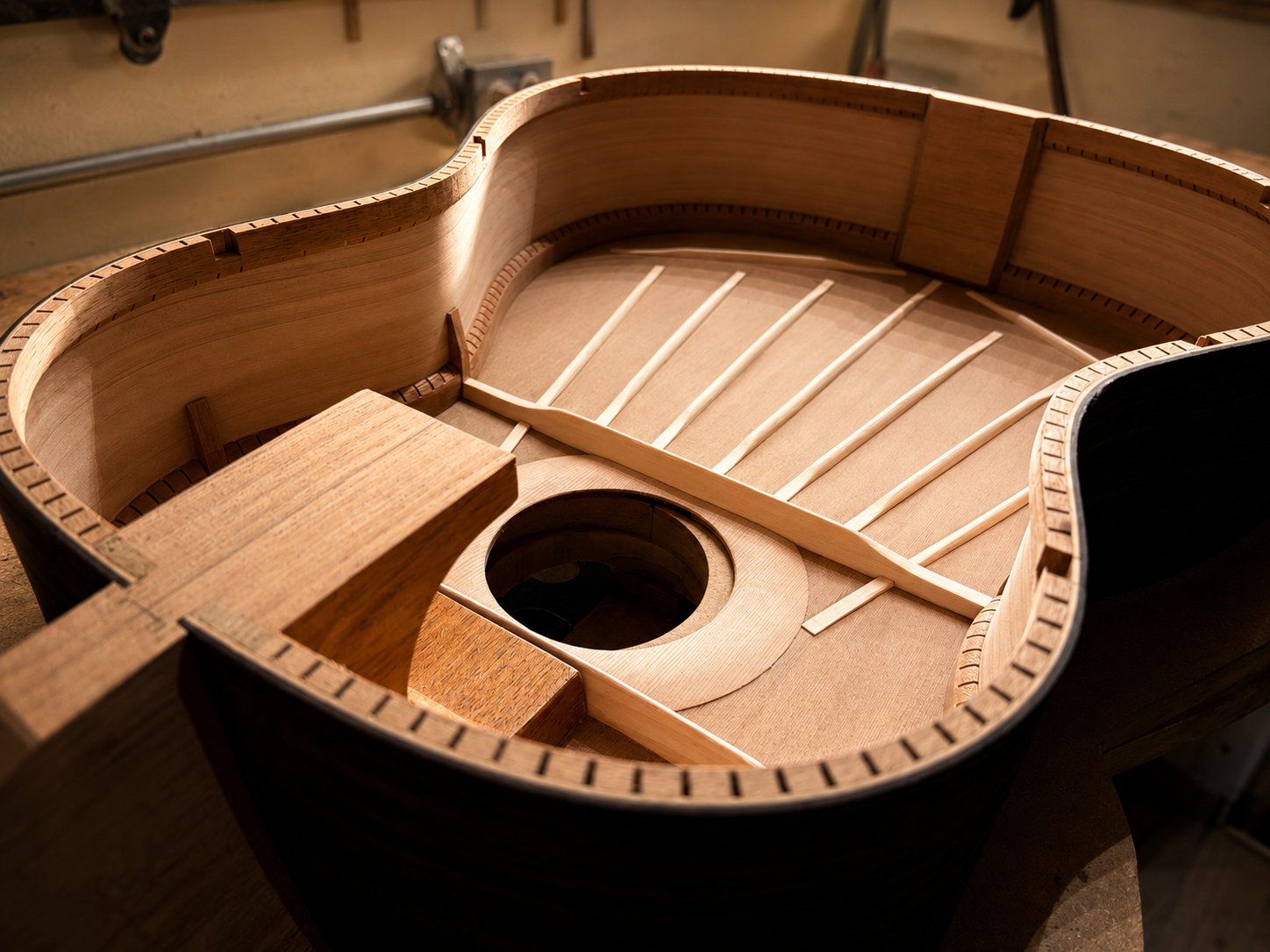
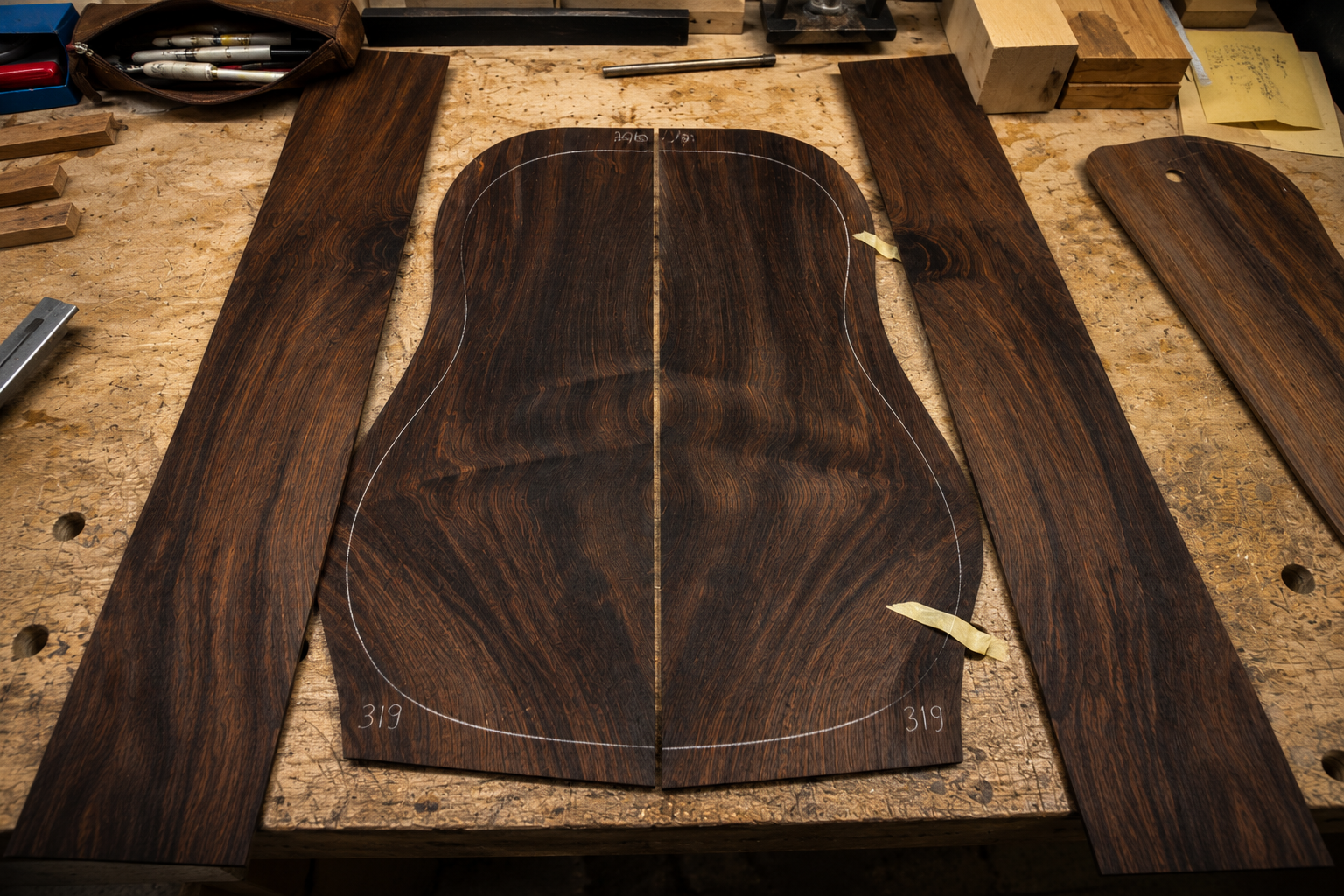
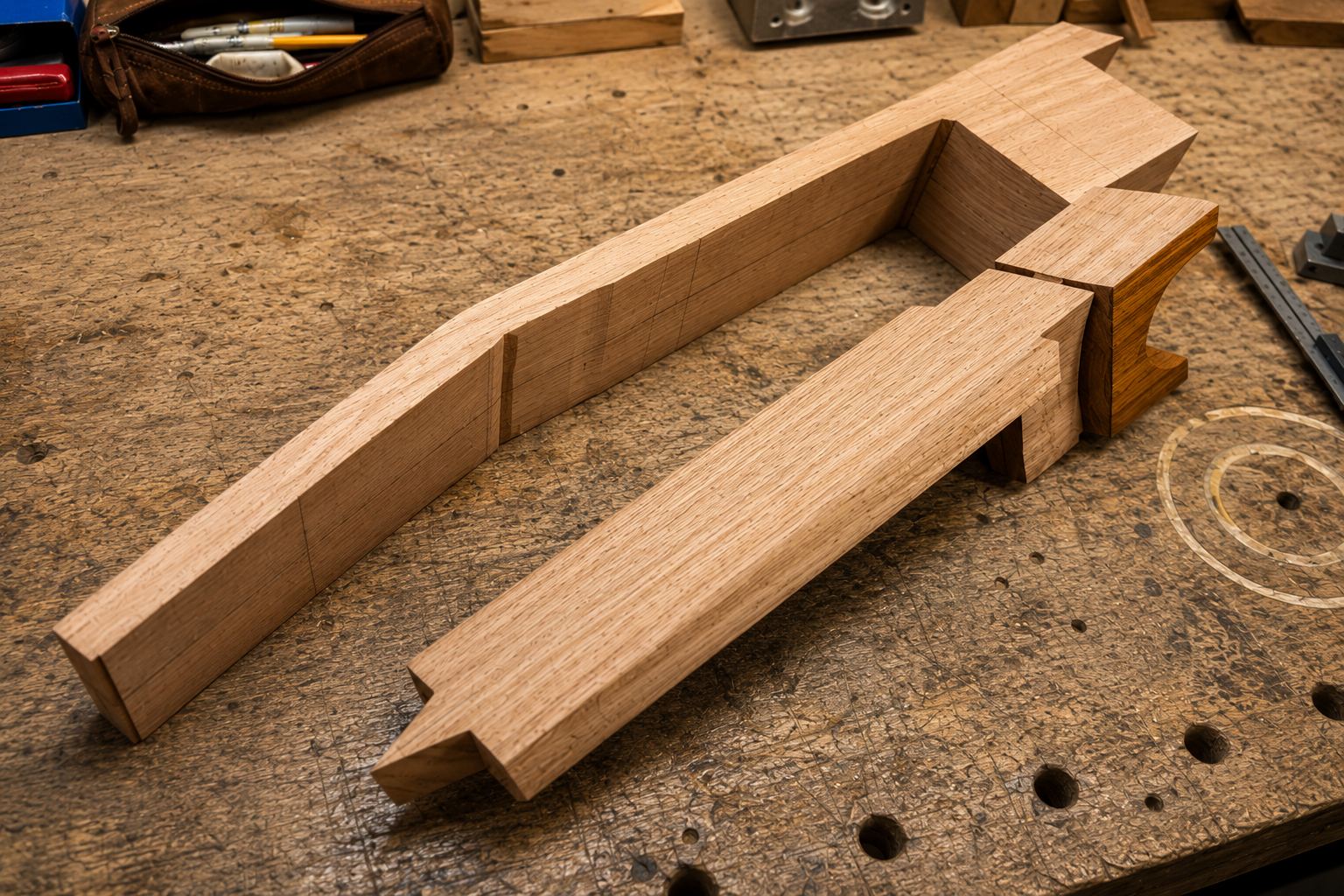
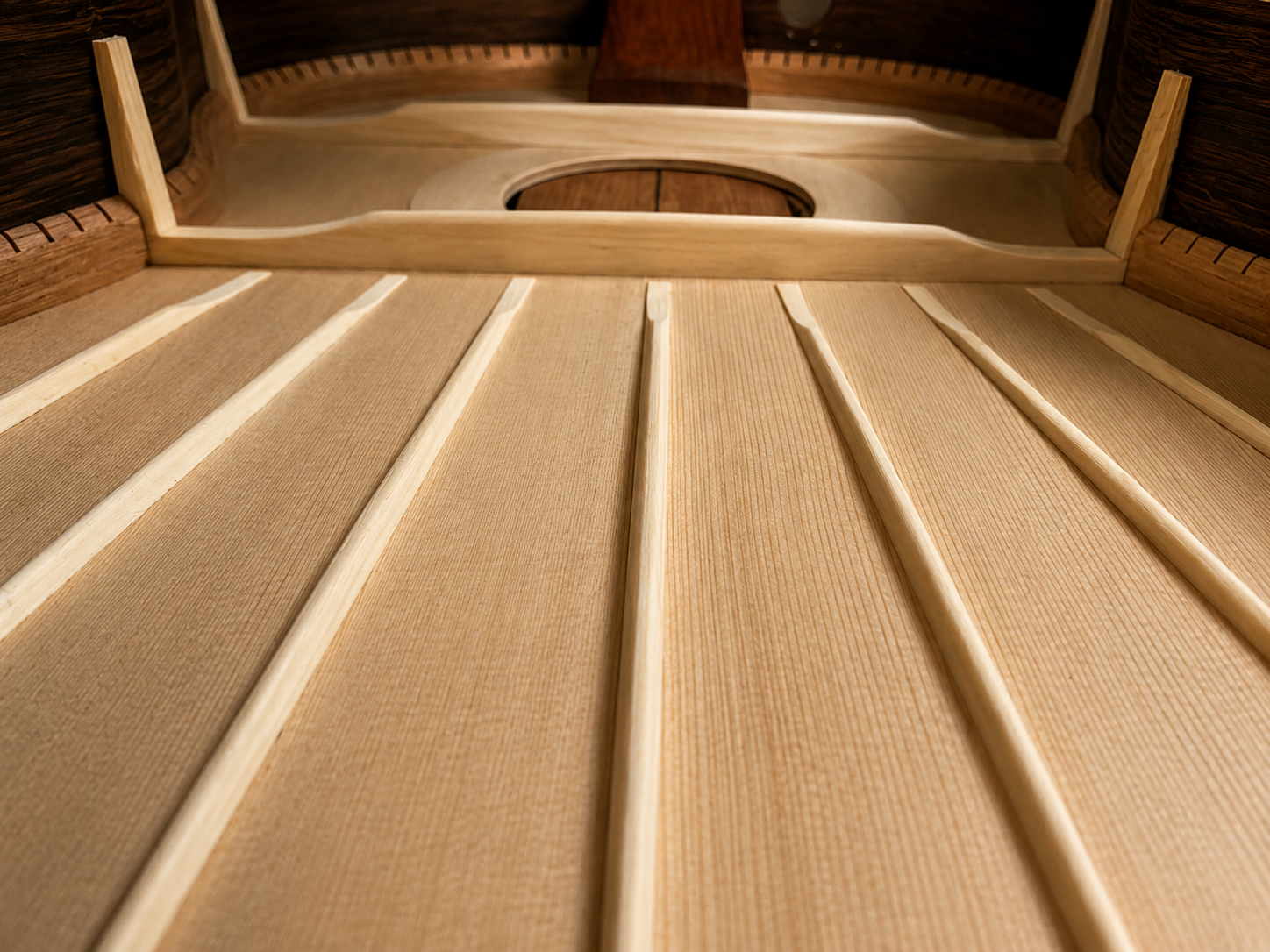
Every element of the instrument is carefully assembled to avoid any unwanted or residual tension, ensuring that each component is built and fitted precisely, with the correct angles, shapes and structural support, so that every part contributes to the overall system and allows the instrument to develop its own natural voice.
A significant part of my work is focused on comfort and ease of use, including careful consideration of neck shape, string spacing, action and overall setup, so that each guitar feels comfortable and allows the player to concentrate fully on musical expression.
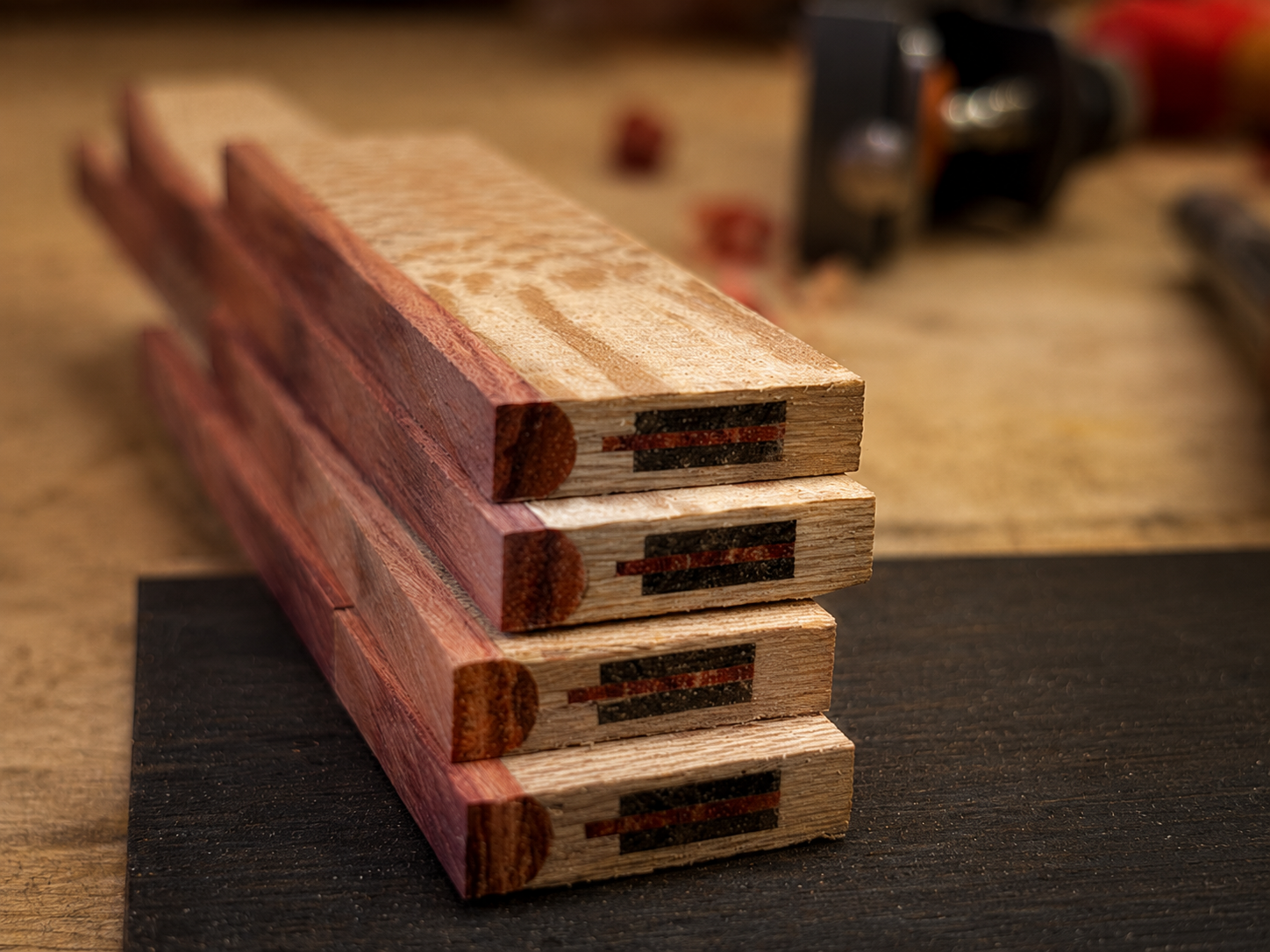
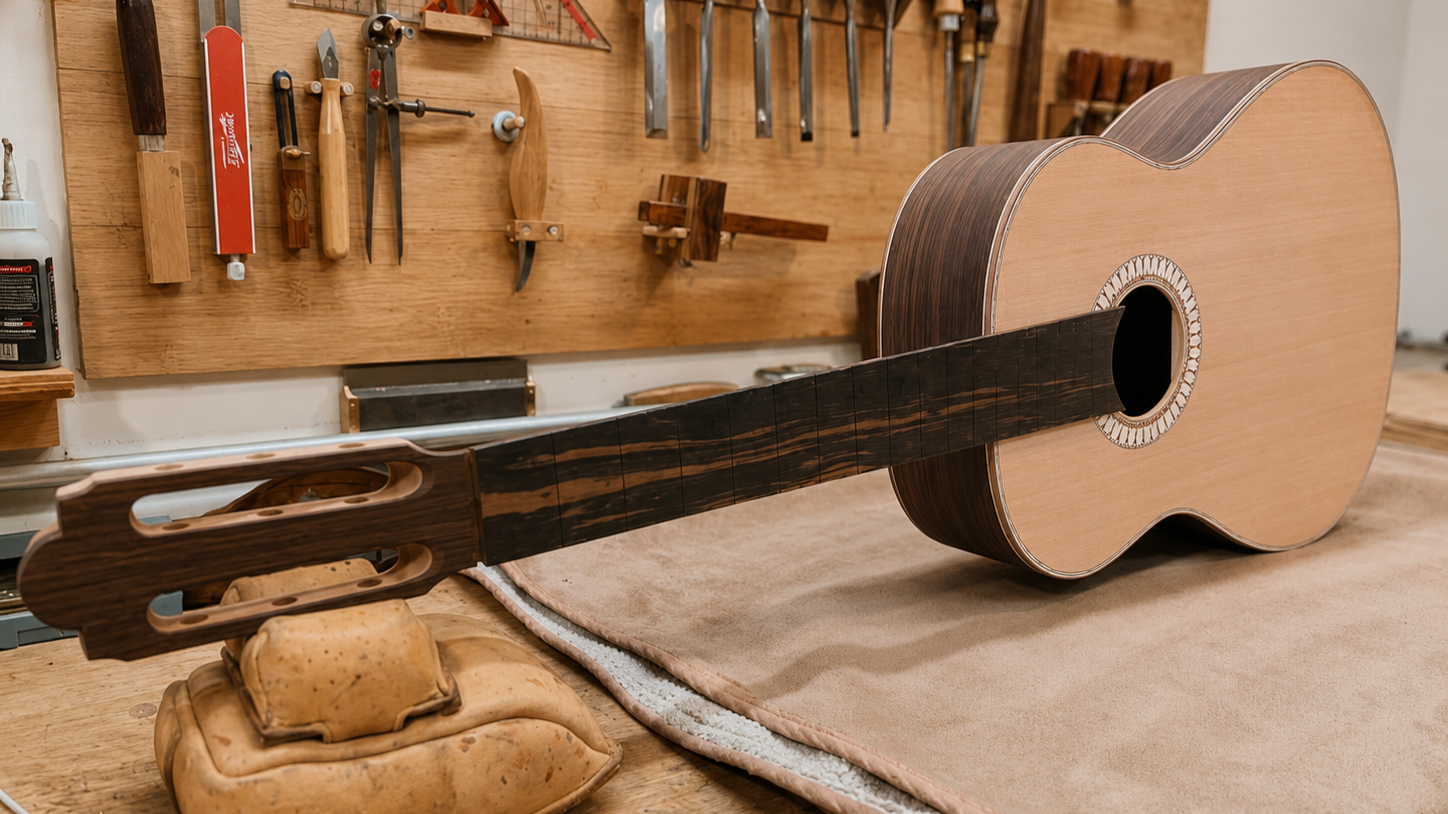
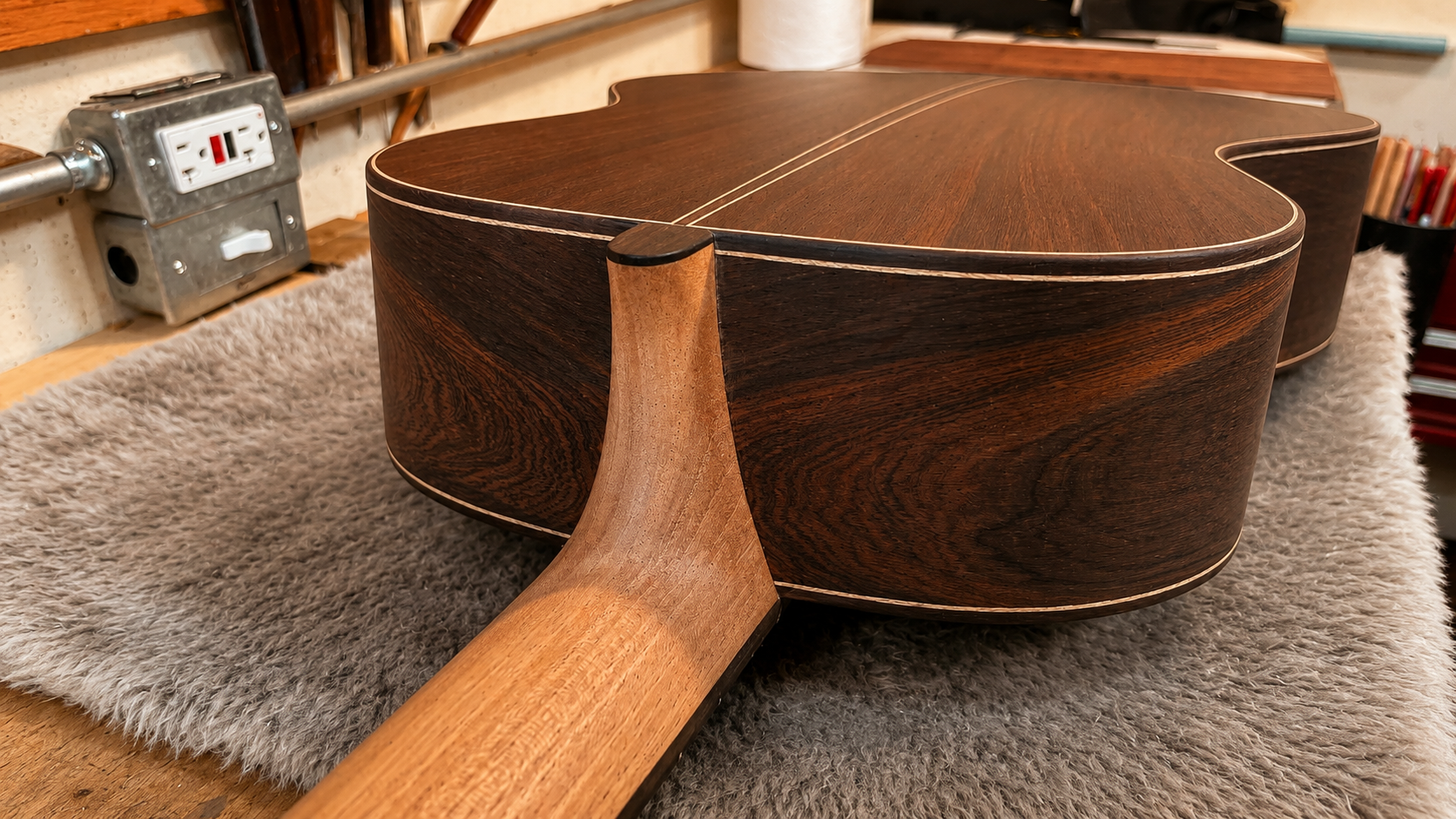
Double Top Construction
This soundboard design is built using two really thin wood layers separated by an internal channel structure carved into the inner layer. The construction reduces weight and increases responsiveness, projection and dynamic range, preserving the warmth and depth of a traditional classical guitar.
Elevated Fingerboard
The elevated fretboard raises the string plane in relation to the soundboard and modifies the angle of the strings with the saddle, contributing to a feeling of more open sound and better projection. It also improves playing comfort at a different, more natural, approach of the left hand with the neck.
Other Considerations
Depending on the project, additional refinements may be discussed, including:
Alternative bracing approaches
Lightweight structural adjustments
Neck geometry variations
Playability-focused modifications
In addition to traditional construction, certain design options may be explored to suit specific musical needs or preferences.